The following post is divided into three sections: Masks, Summer Happenings, and Getting Prepared. I hope you mith be able to find at least one nugget you are able to do something with.
Masks
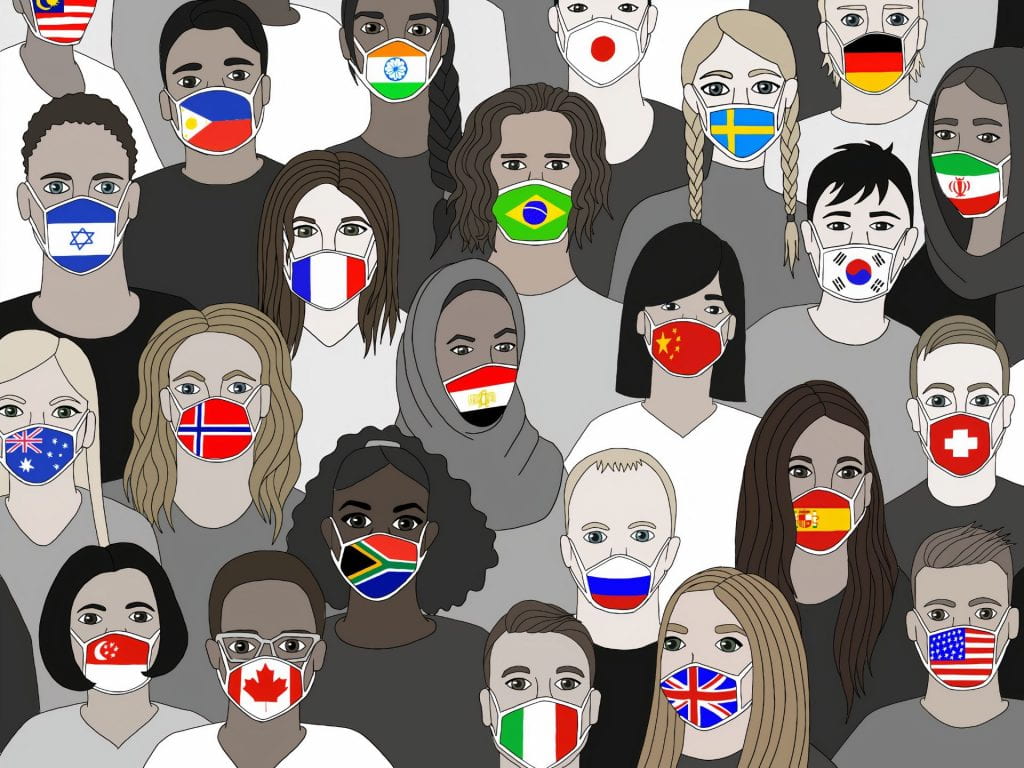
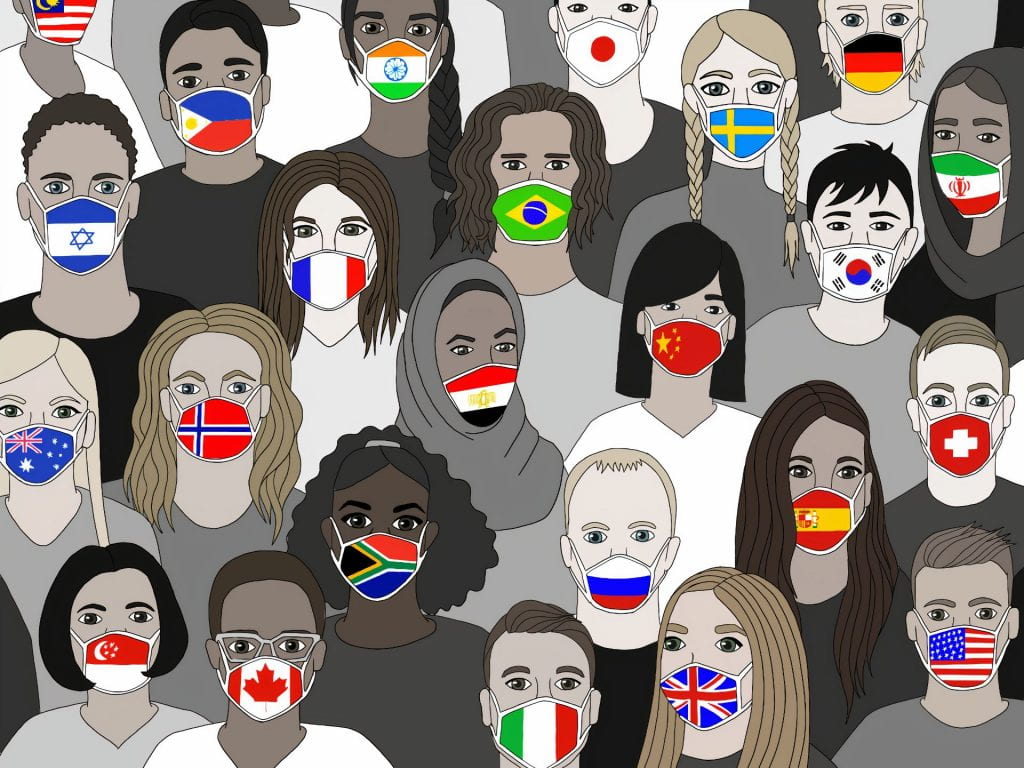
United Nations COVID-10 Response on Unsplash
Who would have thought the maelstrom kicked off by the simple step of wearing masks in schools? We are fortunate to be beginning the 2020-21 academic year fully in-person. Masks are clearly a dominating concern, if not just something on people’s minds. For parents this might begin with thinking about how to get their child excited about wearing a mask. The tactics to mirror what many parents do with wearing “big boy” and “big girl” underwear. Such things as superheroes printed over the mask, a possible motivator. Then, there is the whole element of mask care. Purchasing a holder that goes around the child’s neck, similar to a croakie for glasses, is one effort to prevent children from forgetting their mask, setting it down, or even crumpling and jamming it in their pocket. But not all students will have these holders and a crystal ball is not needed to be able see the amount of masks that likely will be lying around. Only unlike the myriad items spilling from a school’s “Lost and Found,” the masks simply will be tossed.
Personally, I have given some thought to a sort of list of features to prioritize in a mask. Finding the right mask of sincere importance, as covering my breathing holes eight hours a day is something that may not prove so easy to adapt to.
- Breathability. A clear frontrunner in the criteria.
- Comfort. On my face but also ears.
- Safety. Meets the specifications to protect others and myself.
- Ability to project my voice. So students can actually hear me.
- Transparency. I am thinking about how important it might be to show my mouth for students to better read my expressions and even lips. Afterall, the majority of students are not native English speakers.
*Notice cost is not an issue. Over the summer I purchase a handful of different masks to experiment with, and never were they more than a few dollars. Nor do I prioritize the design or message. However, the masks with “Make America Great” scripted across them, somehow don’t end up in my cart.
The last criteria, transparency are those masks designed specifically with the deaf in mind. So they could read a person’s lips. However, before even beginning the school year, it is easy to predict an added challenge hindering cross-cultural communication. Facial expressions key, as is a face free of a mask so a student’s voice can be projected and pronunciation understood.
Summer Happenings
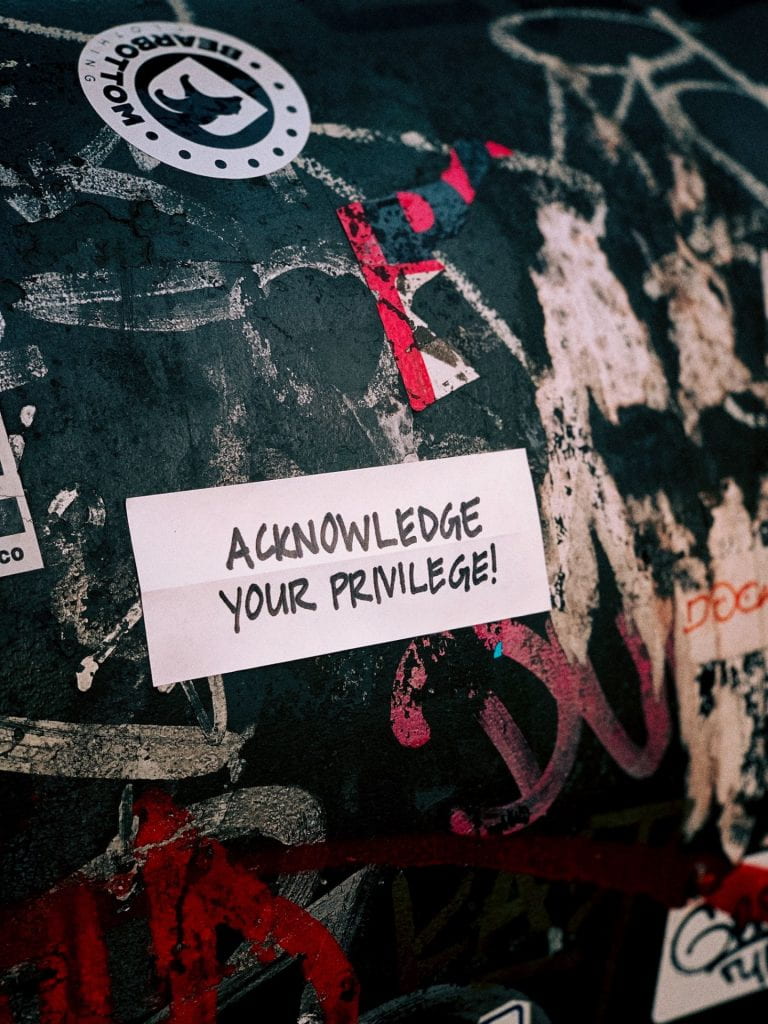
Photo by Jon Tyson on Unsplash
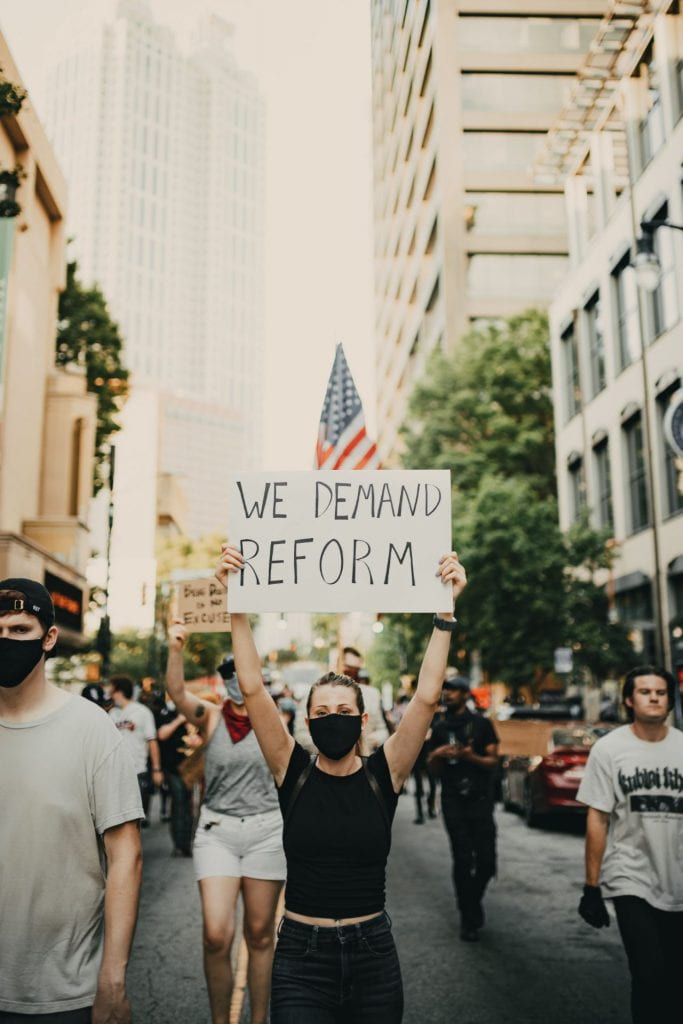
Transitioning beyond masks, a recent end-of-summer reflection centered on how a clear shift was taking place between the Achievement Gap focus and what now gripped people’s attention, the Privilege Gap. Certainly the pandemic exacerbated all the discourse around equity. Besides all the hysteria around COVID and “to wear, or not to wear the question,” the summer of 2020 might aptly be labeled the Anti-Summer. Anti-racism and anti-feminism, two antis leading the charge. One of the top five best selling titles, “How to be an anti-racist.” Two others in the top five being “White Fragility,” and “How to Destroy America in Three Easy Steps.” Equity, with good reason is legitimately on most everyone’s mind.
Though I did not hyperfocus when the tides were high; Black Lives Matter protests, movements to defund the police, etc. my attention was grabbed recently by an article written in the San Francisco Gate. Definitely more low tide! The title sums it up well. “’Learning pods’ threaten to widen the privilege gap in Bay Area schooling.” The author cites Clara Green and an opinion piece Green contributed to the NY Times.
But first, what are “learning pods.” No need to feign understanding as the concept did not exist two months ago. Born out of student and family experiences with virtual learning as a result of the pandemic, learning pods are quickly becoming another option. Some families are distancing themselves completely from schools and opting for only learning pods, whereas others are utilizing them as supplemental. More than a buzz word, one San Francisco-based group on Facebook has more than 9,500 members. Furthermore, the “main” pandemic pods Facebook group is 30,000 and growing. Their description on the “About this group” page:
Join this group to connect with other families, teachers, and caregivers as you figure out how to address your family’s childcare and educational needs during the pandemic…and stay for the information and resources shared in this group to help you navigate schooling and childcare during these difficult times.
The very idea one in which many families find to be of necessity. A possible place marker for some, while others are likely to thrive and remain with this alternative model. One in which individuals but sometimes also pop-up services in which teachers are hired and managed. In some cases, parents are even taking on the teaching as they share their areas of expertise.
Simple put, learning pods are all about education.
However, in the NY Times article Green goes so far as to claim, “White parents are again ignoring racial and class inequality when it comes to educating their children. As a result, they are actively replicating the systems that many of them say they want to dismantle.”
Really?
Getting Prepared
 Photo by Element5 Digital on Unsplash
Last, I thought I would begin a sort of “veteran” teacher’s list of preparations for the start of a new school year. The plan is to add on to this, up until the first day of classes, less than two weeks away. This being my recipe of sorts. In no way is it “THE” recipe.
- Know thy students:
I begin this by playing with students names, nicknames, birthdays, etc. The more I write/type their names the better. This begins with a spreadsheet where I note the aforementioned details and add notes such as, “Grace’s little sister,” “Lives downtown,” or “Father works at school.” I also make a separate chart of birthdays by month so I can put these in my Google Calendar and be prepared to wish them a special day. During this process, I deliberately think about each student and their name. In Ecuador I worried about keeping the Marias straight. Maria Elena, Maria Christina, and Maria Belen. For Tunisia it was the Mohammads. In Thailand I am especially tickled to read the nicknames. This year I have no Sand or Beach. However, I do have a boy that goes by Whale.
- Organize the learning space. This year’s social distance requirements add an interesting element to the classroom design. However, I already have some ideas.
- Prepare for first days (social emotionally and really building community and then context)
- Introduction of myself (a video to be shared with students and parents this year. Taking what I learned from virtual learning about the power of teacher generated videos.
- Course overview (Syllabus? Video?)
- Google Sites creation (a place to store parent newsletter links, tutorials for example on how to read feedback on PowerSchool or whatever Learning Management System/Platform a school might have). This Google Site is a new step I am taking to consolidate information and resources but also hopefully create more meaningful parent partnerships. It also doubles as we begin to utilize Google Sites as a beginning to reflective learner-centered portfolios. A tool not only invaluable for student growth but also helpful in guiding student-led conferences.