MASTERING FIRE WITH WATER: A LESSON IN CREATING EDUCATIONAL SPARKS

Many outdoorsy types, including boy and girl scouts, dream of successfully mastering the age-old art of igniting fire with nothing more than a magnifying glass. What if I told you I started a fire with water?

Nurturing Trust and Agency: The Cornerstones of Inclusive Education

As educators, we invest copious amounts of time into planning for the school year and in the first few weeks intentionally creating community in our classrooms. At the forefront, is fostering an inclusive environment where every student’s voice is valued and respected. Listening and truly valuing one another is our hope. As is collaboration and providing multiple opportunities for students to build connections with one another. Yet, at the foundation of everything is a fundamental feeling of trust. A Harvard Business Publishing Education article suggests that activating positive emotions, including trust, among students helps students foster cooperative relationships, build resilience and persistence, and increase motivation. Further, trust is in many ways tethered to agency. Positive and effective learning environments should induce trust. Trust in teachers, classmates, and possibly even in the education system. Of course, however, trust must begin within the individual. Then, there is empowerment. Not being acted upon as if to say, “I am giving you the choice.” But from within. This subtle nuance is the spark. It is the sensing of control, “the world is at my doorstep.”

But beyond trust and agency, what are the other necessary ingredients to creating optimal learning environments?

Learning Language, Breaking Barriers: The Role of Authenticity and Place

Recently I was in a high school language classroom and it took me back to my first experience learning Spanish. The class was held in a lecture hall where I sat passively amongst 200 other students as the professor stood up front and rattled on incomprehensibly. Feeling academically wounded, I would then limp over to the language lab. Here, a teacher’s assistant would open a sliding glass window to enquire about the module. Then, before pushing play on the cassette recorder she would hand over tight-fitting headphones, a #2 pencil, and a scantron sheet. Never was there the ability to pause, let alone stop. The “show” just went on. With a one in four chance, I would guess, weary to have too many Cs blackened. My confusion and being disheartened eventually lost out to a more pervasive feeling. One of repulsion. This is NOT the experience we ever endeavor to create for learners.

Oddly enough, a decade later I would be in the classroom teaching Spanish even though I questioned if language could be learned in a classroom. My sentiment is captured in a timeless parody called, “One Semester Spanish Love Song.”  When I last watched, the first comment below the video read, “I took Spanish all the way up to AP Spanish in high school. This song summarizes how much of it I remember.” Might this be because of relevance? Language often is learned by going somewhere. We learn it when we have a purpose. When it is authentic. Furthermore, might there be ties between place-based education and the learning of language? Certainly, a deeper understanding of local culture and environment is integral. This example of learning a language ultimately can be translated into what it means to learn anything. The importance of place, purpose, an individual’s motivation, and authenticity. Ultimately, getting out of the classroom and into much more boundless spaces of learning.

Even if the reality for many teachers remains within four walls, we know learning is like breathing. Students will learn no matter what. So, let’s keep the “air” as clean as possible.

The Container: Creating the Right Conditions

So I did really light a fire with water. I share this because it showcases what is possible with just the right conditions. Might we as educators intentionally create such similar conditions? Where there is a spark and then a fervent fire for learning. Countless times in the past I have filled a gallon glass jug with water and set it in the sun to allow for dechlorination. Recently, I errantly placed it against a dry wooden stump where in the days to come I would water saplings. 18 hours after filling the jug I received a text from our tenant saying, “There was a small brush fire at a tree stump in the front of the house, all put out now and heavily watered down. It was caused by science and a glass water jug which magnified the sun…” He was being generous, the fire was caused by ME! Well, my negligence along with heat, dryness, powerful morning sun rays, and the water’s reflection. Never in my wildest dreams would I have considered the gallon jar of water a fire hazard. Besides being grateful to have learned the lesson the easy way, I thought about how this example speaks volumes about what is possible. What is possible with the right conditions?

So, venture forth to continue to spark inspiration and kindle the flames blazing within your classrooms!

#############

HOW TO REKINDLE THE RUNNER’S SPIRIT: FROM LAST PLACE TO A FRESH START

Life’s rhythm these past few months has resembled more staccato than flow. However, after more than three decades, I find myself on the familiar yet uncharted path of rediscovering my love for running. In turn, I notice an improved sense of joy, creativity, and legato-like feel to life. Smooth and steady. This fits with education as such exercise has brain-changing effects.

Up until six weeks ago, I would admit to running, only if I were being chased. However, it has not always been this way. I was fueled by the boundless energy and curiosity of childhood and could often be found running in the forests, across the hills, and through Mill Creek. I exchanged my football helmet and pads Freshman year for running shoes and surprised even myself by joining the cross country team. I had never run three miles in my life and now we were warming up with this. The training stands out as a vivid memory, yet one particular cross-country competition especially remains unforgettable. It was a chilly autumn afternoon when Coach Wilson moved me up to run in the Varsity match, surrounded by probably two hundred other eager runners. The race was fierce, with every stride carrying the weight of expectations and determination. I wish I could say I became lost on the course but the truth was I started too fast and ran out of gas. I ended up being at the back. The very back. Once I could see the finish line, the supporters could see me too. And on that final stretch, I could see one other lone boy in a blue jersey just ahead of me. The absolute tail to this whale of a race. As we approached the finish line, the atmosphere grew electric. I suppose this is when my brain had the most changing effects! To this day I wonder if the cheer for the last runners sometimes rivals the 1st place finisher. For most of the race, I had been trailing far behind, lost in my struggle against the course. But, in the final stretch, when I spotted the second-to-last place runner, I summoned every ounce of strength left. Sprinting with all my might, I closed the gap. It was an all-or-nothing effort, and my parched mouth was seemingly whetted by this small victory. To not be the last runner. This however would not be the case, for as we reached the finish chute, the blue in blue abruptly veered in front, stealing my chance at redemption. I crossed the finish line dead last. The first, but also the last time this ever would happen.

Battling Shin Splints in Military Boots, Barefoot Adventures, and Blistered Feet

Fast forward four years and I picked up running again. Only this time my fancy shoes were traded out for leather combat boots. I was part of a Ranger team in the ROTC program at university. The distance tripled and a 40-pound rucksack now weighed heavily on my shoulders. This was an experience that left its mark—quite literally. Brain-changing, to say the least! Those rugged boots pounding against the unforgiving terrain eventually gave rise to the nemesis of every soldier: shin splints. I continued to run, the discomfort growing until I was hobbled. Decades would pass before I would even trot again.

Then in 2013, I came across a book called, “Spark.” The author Dr. John J. Ratey explores how exercise has a profound impact on the brain. I read convincingly about how aerobic exercise has the power to transform one’s health. Something I knew from experience. And nowhere did it indicate one must run. Shortly thereafter a friend recommended I read, “Born to Run.” Christopher McDougall, the book’s author, shares how he overcame injury by running barefoot with an indigenous people in Mexico who were recognized for their abilities to run long distances with huaraches on their feet. Not the huarache of Mexican street food folklore, made of masa and topped with refried beans, meat, cheese, and salsa. No, these huaraches are simple flat sandals, one continuous strap that attaches to the bed of the sandal between the first and second toe. I dabbled in a version of barefoot running, once even running barefoot high in the hills above our house. The result was blood blisters stretching the entire length of the bottom of both feet. And my shin splints from years ago still flared up. Once again, I stepped away from running.

Exercise and Change the Trajectory of Your Life for the Better

Running seemingly became a distant memory until recently when I was inspired during a high school cross-country race. I stood at the edge of the course, the young runners crept and clawed up the steep 8% grade hill. I could almost feel the burn in their legs and the determination in their hearts. Some managed to run the whole way, many walked, and some even maneuvered with their hands pulling at the earth. For some reason running suddenly appealed to me. Maybe because I told myself, “I bet I can run this hill without stopping.” After the race, a colleague randomly shared a TED video of Wendy Suzuki. She is a neuroscientist at New York University. When I looked at the number of viewers, over 16 million, I felt a little like I did in crossing the finish line last. How had I not seen this video? In it, she shares how study after study shows how we benefit from exercise. Before closing she imparts, “I want to leave you with one last thought. And that is, bringing exercise into your life will not only give you a happier, more protective life today, but it will protect your brain from incurable diseases. And in this way, it will change the trajectory of your life for the better.” Convinced, I bought a new pair of running shoes and registered for a 10km run to benefit a local Dry Forest.

Embracing a Healthier Rhythm of Life

A newfound perspective on running has since rekindled the flames of passion for the timeless sport. Yet, choosing to exercise for the benefit of your brain does not have to be limited to running. I invite you to join me on your odyssey, as you remain motivated to move your body. You may even experience greater flow, legato in the place of staccato! Inattention, tiredness, and brain fog shelved for a higher vibration and healthier rhythm of life.

7 Tips For Success
#1 Start slow and keep mileage low so as not to overdo it
#2 Get professionally fitted shoes, creating peace of mind that what you have on your feet is best
#3 Recruit a partner to be your “running partner”
#4 Be creative and change routes for your eyes and body to experience the scenery and terrain
#5 Sign up for an event so you have a goal to work towards
#6 If there is a day you don’t feel like running, take a walk
#7 If you don’t feel like running (or walking!) do something that is active and provides you with joy

####################################

LAUGH LIKE THE WHOLE WORLD IS WATCHING

Might May 11 mark a new path forward? For the past several years society has seemingly carried the Sisyphean rock, Covid. The date marks the official close of “Emergency Declarations” in the United States. In effect, this is the end of both the COVID-19 national emergency and the COVID-19 public health emergency.

Emergency, emergency, emergency.

We need not continue to live and learn in such a state.

And this is something to certainly celebrate.


Immersed in Crumbling Models

The month of May bears witness to other forms of celebration, with commencements across the nation and abroad. Speeches will soon be scribed and just how many center on the power and importance of transition is left to be determined. Few, however, likely will focus on the importance of humor. In a world quickly becoming more conscious of the crumbling models all around us. Political, economic, religious, economic, even educational model! Resiliency will increasingly be more important. A component of such resiliency is humor.

You may ask yourself, how many times did I laugh today? If you are able to take this inventory, whether 3 or even 17 times, then a more apt answer probably is, “not enough!” Carol Whipple published University of Kentucky Cooperative Extension published how on average, a child laughs 300 times a day while an adult laughs only 17 times a day.  In “Big Think,” a multimedia web portal which “challenges common sense assumptions and gives people permission to think in new ways,” Matt Davis contributed an article titled,  “Why a good sense of humor is an essential life skill.”  Davis indicates how research has shown that humor can improve the physical immune system as well as cardiovascular health.  “Aside from improving your health, laughter can also lead to greater creativity and productivity as well.”

So, if we know laughing is good for us, then why are we not doing it more?

Probably for the same reasons that few philosophers ever have given laughter much thought. Nigel Warburton summed it up well when he wrote, “Thomas Hobbes and René Descartes, who believed that we laugh because we feel superior; Immanuel Kant and Arthur Schopenhauer who argued that comedy stems from a sense of incongruity…”


Thriving as Opposed to Surviving

We seem to be enmeshed in seriousness. In the field of education, administrators concentrated on whatever “fires” need putting out. Educators focused on curriculum coverage and lesson plans, and hopefully student well being.  Students often with centered attention on grades. And all too common, parents operating from a narrowly defined notion of what success looks like for their child. Everyone all the while, seemingly playing the part of pawn. Fixated on the tree before them and not the glorious forest. Or, in a world of Covid, simply surviving.

Yet, we are on the precipices of thriving. It is right within grasp. A ripe fruit ready for the picking.

It is refreshing to see how momentum is being gained as we transition away from knowledge and into competency. America Succeeds, a 501(c)(3) nonprofit is committed to improving equity, access, and opportunity in education. To do this, their focus is upon Durable Skills, a combination of how you use what you know along with character skills.  Yet, I am hopeful they may begin to consider the role humor will play in the days to come because nowhere listed in the 36-page Durable Skills report, does humor appear. Ultimately laughter is essential to success but also especially necessary as “function” dissolves the archaic “forms” in which we have been living. Victor Frankl alluded to humor when he wrote in Man’s Search for Meaning (1946), “another of the soul’s weapons in the fight for self-preservation.”  Author and educator May Kay Morrison asserts to the power of humor, even coining a term she calls, “humergy.” Humergy  as she defines it, is the energy that emerges from joy and optimism of our inner spirit.

A sense of humor is an essential life skillBrain research backs the power but also importance of humor. Laughter is surely within each of us, yet simply may require a bit more space and time to express. As May 11 marks the terminus of Covid and the end of a state of emergency, let us step forward with even greater joy, lightness, and laughter.

TRY IT YOURSELF:  Jim Paterson shares these few ideas for how you might attempt to use humor.

Get back to work. A bit of humor gets attention and provides a break, but teachers should have it relate to the work somehow, should keep it brief (even if they let students participate) and have a path back to more serious information and a method to bring their students along.

A simple surprise. Just having on an odd hat or projecting a cartoon at the start of a class can get students energized. A simple surprise is also a way that a teacher who doesn’t think they are funny can easily bring some lightheartedness to the classroom.

Let them at it. Have time when students can tell a joke (with guidance about the humor being appropriate) and you will find that even the most introverted ones might be willing to participate. Give them a chance to write about a funny incident.

Game time. Give students a quiz with the right answers mixed in with outlandish wrong ones. Have a game show where the answers are on topic, but the game is humorous and fun.

##############################

KNOW THY SCHOOL, DESIGN FOR EXCELLENCE

“People are status-seeking monkeys,” purports Eugen Wei, former product leader at Amazon, Hulu, and Oculus. This status-seeking links with an understanding that identity is a fundamental aspect of our very human nature. An evolution of identity all around that begets a moment of preponderance for those in the world of education. How well do schools know themselves?” 

Sensibly, we expect to find shoes sold in a shoe store, not bananas. Many models, brands, and sizes of shoes and yet all still in the shape of a shoe. However, schools often seem to brand themselves as Chinese markets. Everything to all people. The ethics of this approach might be questionable, and one might also be left to wonder if programs become diluted as a result of being out of focus. Further, some wondering might be whether there is any intersection between a school’s strengths, attributes, values, mission, and vision? And their website, what might it suggest and is it truly aligned?

As a school are we:

Athletics focused? 

Sustainability driven? 

Place-based? 

International Baccalaureate Diploma (IB) Programme or Advanced Placement (AP) curriculum focused? 

Interdisciplinary project-based?  


We Can Have It All

As of late, I’ve given a bit of thought to “yes/and,” as opposed to “either/or.” Though there is something certainly to be said for a school having a clear identity, they need not pigeonhole themselves into one single initiative or monocular focus. Especially if interests are not competing. Sustainability can funnel down and through everything in a school. Athletics too can be tied to sustainability and individual health. While interdisciplinary projects can be place-based. Advanced Placement or the International Baccalaureate can be an opt-in for students. None of this is a stretch. In fact, it attests to flexibility and opportunity. A multiple pathway approach.


The Omnipotence of Culture

Identity includes culture and this culture is a bit like breathing. It just happens. For better or worse. I like to think, for the better. However, because of this, it behooves us to intentionally design cultures. So learning is optimal. And so, as schools we are ethical, ultimately doing that which we claim. Conscious and deliberate creation as opposed to letting culture just happen. Schools mustn’t play the reactive “game” of Whac-A-Mole, where the “gophers” (dealing with parent and teacher concerns, managing budgets and resources, hiring personnel as a result of high attrition, etc.) take precedence over engaging in work that improves teaching and student learning. The development of culture requires vision and the wisdom to leverage knowledge and experience. A consideration but also a plan for where a school wants to be in 5, 10 years, or even the turn of the 22nd century!


I would argue schools are wise to intentionally design learning for multiple pathways. Equally, I caution that we do not kid ourselves. With several foci, not everything is likely to be done well by all students. This realistic notion is one of balance but also acceptance of perfection in process. Contrary to this, however, is the importance of a school’s due diligence to create cultures of excellence. Defining what excellence looks and sounds like should be at the foundation. Following this, students must have explicit opportunities to see this “bar,” and then be encouraged to push the bar, setting new and higher standards of excellence.  


Not Sacrificing Excellence for Authenticity

Though there may be many pathways, the destination of a high school student is graduation and preparation for the world beyond. A Senior level thesis or capstone course can serve as a sort of rite of passage, an important stage in a young person’s life. An invitation to engage in a year-long process, to create something meaningful. To demonstrate competency, reflect throughout a process, and then showcase what is known but also able to be done.  

This is powerful.

Authenticity could appear at odds with excellence. Failure is an authentic and simply sometimes difficult reality. A student should not fail in putting the “crowning jewel” upon their high school career. To ensure this does not happen, sincere consideration must be given to competencies. Competencies are defined as the knowledge, behaviors, attitudes, and skills which lead to a student being able to do something successfully. Schools will serve learners well when these competencies are clearly articulated horizontally and vertically throughout the curriculum. Such conversations are the kindling of culture and are hopefully guided by two questions: 

~What competencies get assessed?

~How and when might these competencies be demonstrated best?

Inherent in these conversations is one single driver, PURPOSE. School is to prepare students for a future we do know not yet. 

So when “school’s out,” teachers let more than “status-seeking monkeys” out!


###############################

WHAT SLOWING DOWN MIGHT TEACH US

What Slowing Down Might Teach Us

Poquaûhock sounds better than “clam.” Translated “horse fish,” this was the word used by the Narragansett people, an Algonquian American Indian tribe from Rhode Island, to refer to the “quahog,” an edible clam with a very hard shell.  The Atlantic Ocean-dwelling native is of much greater historical importance than an addition to a chowder. The shells of the quahog were initially invaluable in the creation of tools, for storytelling and for recording important historical events and treaties. Beads of the polished quahog shell were crafted and strung in strands, belts, or sashes called wampum.  And wampum belts sometimes were symbolic of ongoing treaties.  So treasured, First Nations’ wampum became Massachusetts’ first legal currency.  The species name mercenaria is even related to the Latin word for commerce.

Yet, with such rich history there is even more to marvel. Inside the marine bivalve mollusk is a soft-bodied invertebrate. One that can live upwards of 500 years! Besides living in intertidal zones and the adaptability this may showcase, the mollusks behavior is one we might stand a chance to learn from. There is a sort of simplicity, a slowing down of time that anthropomorphically must result, as they spend their entire lives in an immobile and isolated state. Yet, the clam is capable of burrowing down or even migrating small distances if in danger.  Otherwise, they remain steadfast. Possibly for centuries!

This is not about becoming more like mollusks. Rather, a glimpse into what behaviors we might begin to bolster, in order to have longer but also improved lives. Moreover, lives where we do not simply exist, but relate as individuals, communities, and to all other life forms.  Connected, balanced, and in life’s flow, symbiotically moving with purpose and defined by shared values.  Slowing down may just be the secret ingredient. Daniel Christian Wahl, author of Designing Regenerative Cultures attests to how we have much to gain when we envision time differently, “A new cultural narrative is emerging, capable of birthing and informing a truly regenerative human culture.” Underlying is a notion of what may very well be our greatest currency, time. The pandemic assisted us in understanding this. Time to pause. Time to reflect. Time to spend time with family. To take more walks. An opportunity to realize what matters most. The frenetic mornings, claustrophobic offices, occupied minutes and hours in traffic and meetings better served as memos. A dawning realization, akin to the sunrise, of primordial potence.

Find More Than Humanity When We Slow Down

National Geographic explorer Paul Salopek, is retracing the journey of some of our human ancestors’ migration beyond Africa. Called, Out of Eden, Salopek is In his tenth year along the 24,000-mile odyssey. Humble Salopek repeatedly seems to pen the phrase, “I am walking across the world.” Said in passing much like one might say, “I’m going to stop by the store.” In the  tenth year of ambling, Salopek is currently in a Tibetan autonomous county in Sichuan Province. In a recent story Salopek shared how this fictional dreamland of Shangri-La was inspired by James Hilton’s 1930s novel Lost Horizon. “Hilton wrote breathlessly of the Shangri-La lamasery… It was a redoubt of ‘utter freedom from worldly cares’ where time paused and people lived for 250 years.”

Half the life of the quahog!

Though there is no univocal definition or description of Slow Journalism, an ambition of speed is absent.  So too are oversimplification and stereotyping.  Walking is the preferred mode of transport, in effect forcing one to slow down and observe carefully. One of the catchphrases of Out of Eden is, “Slow down, find humanity.” I am certain from reading the philosophical Salopek’s writings, what is learned goes beyond the limits of just finding humanity. Possible because time is re-imagined.

A Look to the Trees

German Nobel Prize novelist and poet Hermann Heese is remembered for his body of work centered on an individual’s search for authenticity, self-knowledge and spirituality. In Heese’s ​​1920 “Collection of Fragments,” one passage especially stands out, attesting to the power of time.

“When we are stricken and cannot bear our lives any longer, then a tree has something to say to us: Be still! Be still! Look at me! Life is not easy, life is not difficult. Those are childish thoughts… Home is neither here nor there. Home is within you, or home is nowhere at all…

So the tree rustles in the evening, when we stand uneasy before our own childish thoughts: Trees have long thoughts, long-breathing and restful, just as they have longer lives than ours. They are wiser than we are, as long as we do not listen to them. But when we have learned how to listen to trees, then the brevity and the quickness and the childlike hastiness of our thoughts achieve an incomparable joy. Whoever has learned how to listen to trees no longer wants to be a tree. He wants to be nothing except what he is. That is home. That is happiness.”

A New Currency of Connectedness and Time 

That we might take the time to root ourselves, like the trees. Trusting and patient. Wise, listening, and connected.

In my third year living in a Southeast Asian city of upwards of 15 million inhabitants, concrete prevails more than the trees. Yet, I have repeatedly retreated to lone trees, as forests are seldom to be found. And I have received confirmation. A message of hope, remembrance that I am fortunate to have a life of choice. Conscious and unhindered, I am both imbued and revitalized by responsibility. Embracing uncertainty and ambiguity, while synchronously returning to a less complex story of unity.

One where we are reminded of a new currency, connectedness and time.  Where quahogs and trees are more than mere metaphors of life and longevity. A purposeful and promising path forward.  May the summer help us all reimagine time.

####################

BAKE A DIFFERENCE

Cosmic Cookie Class Recipe:

2 ½ cups community creation

3 teaspoons all purpose empathy into action

2 sticks of “story” 

12 ounces choice

Directions: Preheat classroom with reflection and intentionality. In a large mixing bowl, add community creation.  Combine empathy and action into community creation.  Beat sticks of “story” in medium mixer bowl until creamy.  Gradually combine creamy mixture with community creation and empathy into action mixture. Stir in choice.  Drop by rounded tablespoon onto untreated learning pan. Bake for 9 months or until golden brown. 

“Have you tried Mimmie’s Bakery? They have the most incredible Cosmic cookie!”  My octogenarian neighbor recently reminded me of a child, as she hailed my attention while I rushed out the door the other morning. There was something heartwarming about an older person getting so animated about something many would consider so simple, a cookie.  Her excitement was contagious and stirred in me a bit of curiosity.

What made Mimmie’s cookie recipe so different?

As the day went on, I seemingly couldn’t get the Cosmic cookie off or out of my mind.  Instead of heading down to the bakery, I considered how I might transfer this idea of a perfect cookie recipe to what I care most about, teaching and learning.  Could I “bake” something similar in my classroom?

Teaching very well can be just a generic chocolate chip cookie but in reality, it is so much more.  And it has the potential to get people excited. In the case of children, “keep” them excited.  I often remind myself, a big part of keeping students love for learning ignited, is simply not getting in their way.  I think about how knowledge is cheap and with the web we are saturated in information 24/7.  It is what we do with learning that matters most.  After two dozen years “baking”in the classroom, I definitely have learned many lessons.  However, an end-of-year student survey allowed for a sort of distillation or surfacing of a “recipe” for my own Cosmic cookie.

When eating healthy, nutritionists often say to choose those foods with the least amount of ingredients.  I’ve boiled my recipe down to but four “ingredients.”  It would be foolhardy to think I have perfected the recipe, though there are definitely ingredients and/or steps which I feel much more confident about.  Yet, perfection?  Even those cookies at Mimmie’s surely are a work in progress.

Summer is a time of much needed rest for educators, but I trust is also a chance for reflection. So much news in education this past year was about the abandonment of  the noble profession. With a little distance this summer, I remain hopeful that many educators might remember back to why they chose (or were chosen!) to be an educator. And I hope there is a sense of rejuvenation and excitement.  Moreover, if the “Cosmic Cookie Class” recipe is helpful to even a single educator, I will feel a sense of satisfaction.

Cosmic Cookie Class Breakdown

  1. Community creation: Community does not just happen.  Intentionality is of extreme importance. The critical skill of learning how to listen but also how to give and receive feedback are at the heart of functioning communities.  A “we do this together” sort of ethos exists. Routines definitely help.  Ideas for implementation include:

*Philosophical chairs

*Class discussion and occasional  fish bowl strategy

*Feedback loops changed up and in a variety of formats:

~Teacher to student

~Student to student

~Student to teacher (such a gift!)

~Parents (digital notebooks) and segments of conversations recorded with Mote

~Administration invited in at the start and during the process, not just in culmination

~Community (something I especially wish to improve)

  1. Empathy but also action:  This begins with awareness.  Several students commented how social studies class “was about becoming  more aware of what is happening around our world.”  Others suggested, “It is about joy, curiousity, and being inspired to create a positive impact that would affect people’s lives for the better.” And, one of my favorite pieces of feedback was how “the class is more a study of life, all subjects combined. Where we find solutions to problems in the world.”  Three ideas for beginning to transition from empathy into action include:

~Start small and add a Virtual Reality experience or simulation

~Read aloud (a book well read and discussed is appealing to learners of all ages)

~Newsela articles citing students as examples of how youth  are making a difference

*Bonus: Partner with experts in the field and they may even broaden your audience for students (eg: Inspired Citizens)

  1. Integrate the power of story:  “Story, as it turns out, was crucial to our evolution — more so than opposable thumbs. Opposable thumbs let us hang on; story told us what to hang on to” (Lisa Cron). Be okay with being vulnerable as you become “known” to students.  Someone who students can connect with.  Sharing anecdotes can add not only “reality” to the classroom but also comfort. The intentional integration of stories, like the time I tacked a horse for a teen my age who had cerebral palsy.  How I was gifted an opportunity to learn gratitude and grace from such an experience. A story like this not only connects with the equestrian lover in the classroom but anyone who might have a beating heart, if the story is one students can re-live with you as you tell it.  Skills learned this past year from a migration project based on story-telling included:

~Slowing down and really practicing what it means to attentively listen.  This can be difficult as habits need to be broken for students and adults alike.  The digital age has sped us up in numerable ways

~As learners listen, challenge them to discern where a deeper “story” might yearn to surface.  Imagine it breaching as a 150- ton whale!

~Developing questions and being prepared to interview but also to design questions on the fly

~Creatively “tell” stories through a variety of mediums (eg. video, stop animation, and podcast)

  1. Provide student choice:  Choice boards can be helpful so there isn’t paralysis amidst a paradox of choices. Further, in an effort to help with scaffolding, suggested tech platforms, as well as process steps are offered as options to follow. The emphasis is always on process yet with sufficient time built in (a calendar proposed), along with feedback, a quality final product is ensured.  Building in a sort of celebration and/or “real” audience helps up the ante and leads to more student ownership and pride of their learning. On my final survey, several students commented with regards to choice.  One student shared, “I love how we get to express our creativity in our learning.”

Power to Make a Difference

It was Maya Angelou who said, “People will forget what you said, people will forget what you did, but people will never forget how you made them feel.”  What matters most in our classroom is this.  How students feel. The four “ingredients” above contain tremendous power. Power to be rememembered? Yes.  But more importantly, the power to make a difference.  

Thank you for reading and for continuing to reflect and learn.

Enjoy the summer and happy “baking”!

######################

REALIZING THE POWERS OF OPTIMISM AND RESPONSIBILITY IN 2023

A handful of years have passed since I set ablaze an effigy. Tis’ the season of Año Viejo in Ecuador, a cremation ceremony meant to signify purification and a goodbye to the past.  An opportunity to allow for regeneration in the coming year. Though undetermined exactly when this tradition began, the origins are likely a combination of religious, political, and sanitary factors. Here in the middle of the world along city sidewalks, three monigotes (rag dolls) dominate as representatives of 2022.

A politician, a professional athlete, and a pandemic.

President Lasso, Lionel Messi, and the Coronavirus.

If I had my choice, we would be burning something to signify industrialization. More specifically, a schoolhouse to symbolize a quick goodbye to the crumbling educational systems of disempowerment we have accepted for far too long. However, as the broken system seemingly slowly decays, I consider the critical importance of optimism and responsibility.

A Vision of the Future

Joe Dispenza, a neuroscientist, researcher, and New York Times bestselling author imparts, “We are either defined by a vision of the future or the memories of the past.”  Though the close of a year results in reflection of the past 365 days, it is our “visioning” of the future that holds the greatest of powers.  What do we want? Accepting that the world is a very different place than when “school” was designed, it seems logical that learning is not the same as it was two hundred years ago.  Part of education’s “overhaul” must be empowerment and responsibility.

The Phoenix awaits, as the old schoolhouses turn to ash. Yet, even if new beginnings are exciting, they are not always easy. Author Nicole Sobon’s advice is fitting, “Sometimes the hardest part isn’t letting go but rather learning to start over.” I think to myself how letting go, surely would be a lot easier, if the thing we were letting go of was in a heap of ashes, especially considering how our species seemingly has a knack of rebounding back to old forms.  And 2023 requires more than a “form” focus. To reform or even transform may just not be sufficient. Instead, might we direct our energies towards the formation of new and creative pathways.  Paths laid down by learners themselves.  To do so, requires the empowerment, trust, and agency of students.  An approach unlike the traditional passive, inflexible, and hierarchical approach towards learning.

A Future Up For Grabs

This past semester I heard an array of excuses but documented six, indiscriminate of validity.

  1. “I was at  a swimming competition last weekend and was sick last week and this Monday.”
  2. “I was unwell this last week with a throat infection that paralyzed me in the neck. I was on antibiotics and I was unwell. I didn’t see the assignment.”
  3. “I might fall behind on some of the work. There is a family emergency and we’ve been quite busy traveling.” 
  4. “I was sick for 4 days and missed an additional day for an out of school activity.”
  5. I don’t know if you heard but there’s a tropical storm passing through and slowly turning into Category 1.”
  6. “I’m not sure what happened but I didn’t see any reply from my Zoom partner. We now have an issue with wifi and electricity in my neighborhood because one of the power stations was hit by lightning or something.”

Besides being enamored by the creativity, especially the one about “paralysis,” I found myself pondering the need to address one core competency in 2023 and beyond.  “Reflect on and take responsibility for your learning and that of others.”

Jared Diamond, a geographer, historian, anthropologist, and best-selling author maintains optimism, regarding our human abilities to solve the problems we have caused. Diamond cites how we should balance hope for the future with a need to be careful and in Collapse: How Societies Choose to Fail or Succeed writes, “The future is up for grabs, lying in our own hands.” World-renowned historian and philosopher Yuval Noah Harari shares a sentiment similar to Diamond’s. Optimism is evident in the dedication of his most recent book,  Unstoppable Us, Volume 1: How Humans Took Over the World, penned for middle school students.  “To all beings — those gone, those living and those still to come. Our ancestors made the world what it is. We can decide what the world will become.”

Stop Making Excuses

Books like Harari’s have a message students need to hear. Tightly woven into the very fabric is a challenge for ingenuity and also an appeal to assume responsibility. No one speaks with greater passion about the urgency of responsibility than Jocko Willink, retired U.S. Navy SEAL officer and co-author of a #1 New York Times bestseller. A comment on Jocko’s YouTube TEDx video reads, “Jocko wasn’t born, he was tactically deployed.” Further, author Blake Stilwill described Willink’s intensity as an understatement. “Like calling Mount Everest “big” or Antarctica “cold.” Whatever the case, Jocko emboldens a new mindset. Ultimately centered on what he refers to as “extreme ownership.” “Once people stop making excuses. Stop blaming others and take ownership of everything in their lives, they are compelled to take action to solve their problems.”

Seeing the Light Always

Simon Sinek’s outlook on optimism is not unlike Diamond or Harari’s. Sinek, a famed author and inspirational speaker has created a business out of optimism. He shares  how great leaders are optimists. “This is not the same as being positive. Positive is finding the light in the now; optimists see the light always,” says Sinek. Educators and parents alike surely see this light daily in children. Remaining optimistic ultimately is a choice, akin to making the choice to stop making excuses. Both require strident action.

This is more exciting than enthralling. Almost alchemical!  To think of the power that might be realized in 2023, if we choose a path of greater responsibility and optimism.

Leaping into 2023

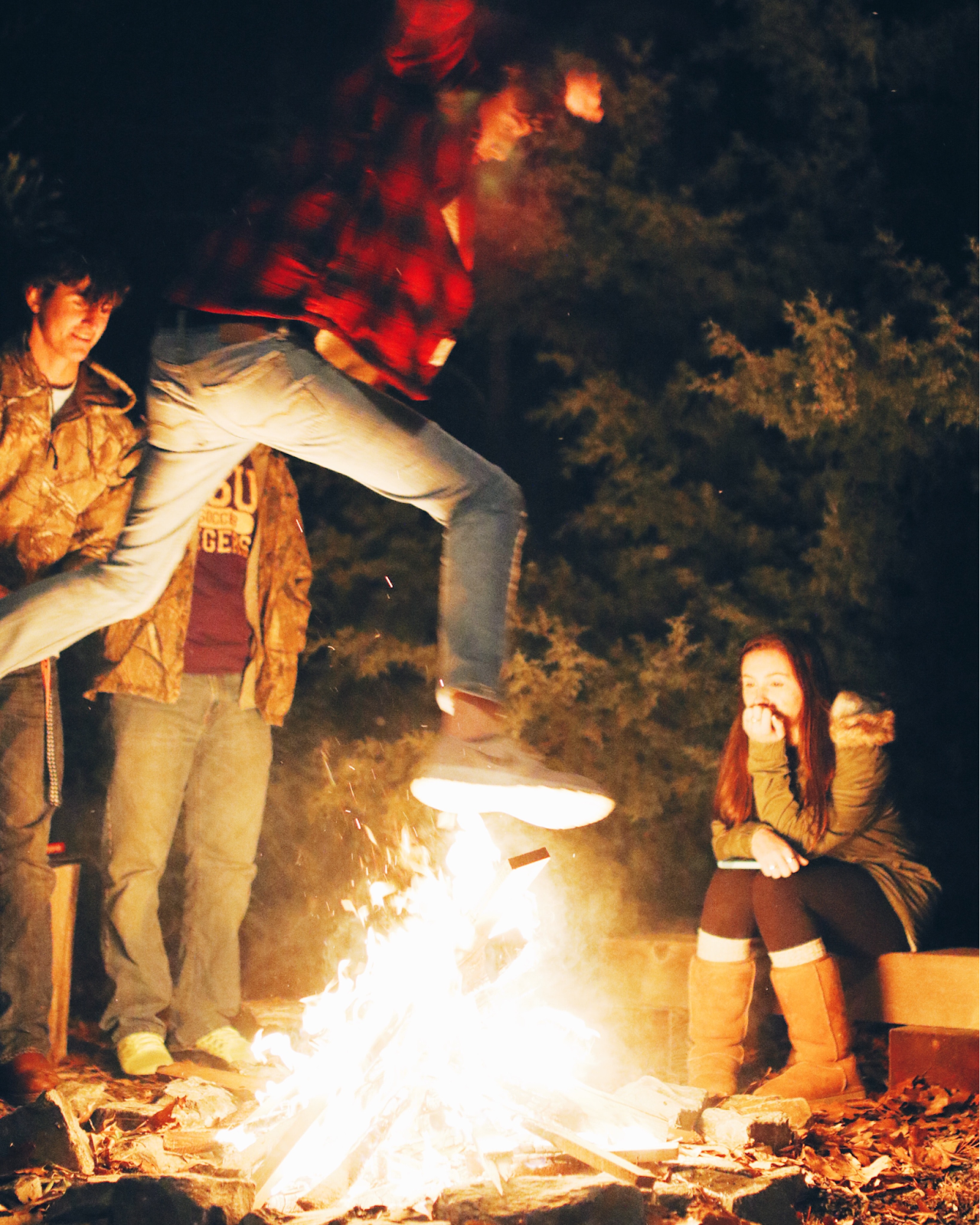
Though a bit rainy this New Year’s eve, effigies still burn on many a street corner. Where I stand, the fully clothed rag doll packed with sawdust glows. The firelight however lessens as I stand transfixed by the flame.  Before being reduced to a pile of ash, I contemplate all that the new year may bring, but also what I may be able to bring to it!  Cognizant of responsibility and optimism’s omnipotence.

Tradition in Ecuador dictates how you can ensure happiness and prosperity in the coming year if you jump over the fire twelve times. For good measure I leap thirteen times.

#############

ABOVE AND BELOW

Say the name Theodor Geisel and few know who you are talking about. Then, mention the name Dr. Seuss and it isn’t just the educators who nod their heads in recognition.  Yet, the two are the same man. 

Growing up in Springfield, Massachusetts the delicious smells which wafted from Geisel’s grandparents’ bakery were at odds with the foul odors emitted from the Gasworks plant a short distance away. This formative experience was one which many readers feel was the genesis of the dark tale of the Lorax.  The foreboding narrative told by the Once-ler however, ends with optimism as one last Truffula seed is revealed. 

The same can be said for both the future of education and coffee.

Few “precious seeds” remain.  


The Future of Coffee

3 billion cups of coffee are consumed each day, nearly all extracted from but two species. Coffea arabica, known as Arabica; and Coffea canephora, known as Robusta are the backbone of the coffee industry…and our mornings! Arabica is the more expensive variety and what you likely will find in your cup at most cafes, whereas robusta dominates the instant coffee market.  Upwards of 80% of coffee production is Arabica and yet it has a low tolerance for rising temperature, produces less beans, and is also susceptible to rust. Journalist Maryn McKenna makes a clear case for the role of change not being optional, as the planet continues to shift.  Details of living with the relentless “rust rampage across the globe” can be explored in Maryn’s Atlantic article titled, “Coffee Rust is Going to Ruin Your Morning.” 

Robusta aptly named is easier to grow and produces a larger, robust or thicker bean. However, with its grainy or rubbery overtones in taste, it is far less preferred.

Though we consume just two varieties of coffee, analysts have identified approximately 120 species of coffee plants worldwide. According to scientists at Britain’s Kew Royal Botanic Gardens, “some 75 coffee species were assessed as being threatened with extinction: 13 classed as critically endangered, 40 as endangered, including coffea arabica, and 22 as vulnerable.”  What?  

“COFFEE ARABICA IS ENDANGERED?” 

If you were taking a sip while reading this,“Pffffff.” You likely spray the coffee out of your mouth in pure stupefaction, 

Furthermore, the researchers suggest how these risk figures are higher than other plants. 


The Connection of Coffee and Education

Though there are not as many students enrolled in school as there are cups of coffee consumed daily, there are more varieties of education than just robusta or arabica. Some however might argue that we still lean on simplification and the labels “traditional” and “alternative” when speaking about education.  

A closer look at coffee and education, might reveal how the two have more in common than might be expected.  And though there is talk about “unschooling,” there is little mention of “uncoffee-ing.” So, we can bet education and coffee both have futures.  We just have to remain open but also take responsibility for how the choices of today certainly impact tomorrow.  

In 1987, the United Nations Brundtland Commission defined sustainability as “meeting the needs of the present without compromising the ability of future generations to meet their own needs.” The term has since become a household word and in 2015 the United Nations released the 17 Sustainable Development Goals (SDGs), an exhaustive blueprint containing 169 targets.  The motivation being one of agreement amongst nations for a future of far greater peace and prosperity for people and the planet. 

The duality of people and planet, a fallacy.  The two, not mutually exclusive, as our species has not, nor probably really wants to, successfully find a way to live on another planet.  We need Earth!!  

Further, we must move beyond sustainability because sustainability is about keeping things going. Benjamin Freud spoke with eloquence about a great transformation in a recent Getting Smart podcast, sharing the importance of regenerative learning and about giving back. “It is about taking action and going through a process of creation…It is about living systems, understanding that we are all ‘nested wholes’”.  

So, how might our schools be hotbeds or boilerplates for this transcendence?  If we start with the crux of the matter, that our future depends on it, maybe then we will really get started.  The future does depend on it. Students and teachers alike, post or pending the finish of the pandemic, have seen the grass on the other side and it is in effect much greener. Numbered are the days of “sit and get.” Furthermore, any divisive lines being drawn between “encampments” might as well be dissolved. 

We need not fight. Unbeknownst to Thomas Hobbes, nature is not in a state of war. Rather, nature hinges on connection and collaboration.  

So must education.

Maurizio Giuli contributed in an article titled, “The beat of the global coffee industry” how short term thinking will have detrimental medium and long term impacts on social, environmental and economic drivers of prosperity from producers through to consumers” He, similar to the SDGs may be caught in dualism’s trap, unable to see how there is no coffee with a compromised environment. 

Let us sing from every mountain top, attesting to the value of diversity. Of our models of education but also of the learners in our midst. Of everything in nature, the children and I suppose….of the coffee too! Again, there is no reason to fight. Schools and systems entrenched in what used to work will continue to collapse. Meanwhile, choices inevitably will continue to emerge and will only multiply. .

As for coffee, a window into agroforestry, provides us a view of systems where there is a blending of diversity and structure. Possibly instead of the traditional cultivation of coffee plants in the shade of other trees, mimicking the natural growing conditions of plants in a forest understory, farmers will rely on even more natural production methods.


Above and Below

Beginning with soil, diversity is the focus. Healthy soil itself is regenerative and over time, more life is created within the system. Complex soil systems are connected and energetic exchange networks. Think “Gardening 101” and cover crops.  Where nitrogen fixing plants actually add nitrogen, an essential nutrient for healthy plant growth, back into the soil. And not just flora to flora, but also flora to fauna.  One example is how when elm and pine trees are attacked by leaf-eating caterpillars, the caterpillar saliva is detected. The trees in turn release pheromones which attract parasitic wasps, a natural predator for caterpillars. Case in point for the role of collaboration!

When what is below is either carefully prepared or allowed to exist in its naturally balanced state, we might turn our attention to what is above.  The sun and shade.  So too in education. Inside and outside of schools and classrooms, it will be increasingly important to promote a natural approach. 

Every child has a foundation, as well as strengths. Their “soil.” Might we as adults help enrich this. Then, concentrate our efforts on what is as natural as breath, learning. There’s evidence that learning is actually written in our very own DNA.  

So, maybe we just need to let the learning happen and not get in its or the students’ way!  But also, we have a role to play as educators.  How might we help prepare the conditions for optimal growth? To provide the right amounts of “sun,” “shade,” and “water”. 

Turning back to the Lorax, the last truffula seed is handed to the child protagonist as he is instructed,

“Treat it with care.

Give it clean water

And feed it fresh air.”


Gardeners ourselves, les us envision our role as stewards. Of the complex ecology of relationships and learning.

Enjoy your next cuppa’.

########################

MAPS, MONSTERS AND THE IMPORTANCE OF REDESIGN

“Whoever fights monsters should see to it that in the process

he does not become a monster.” 

― Friedrich Nietzsche


How might two Icelandic maps, drawn hundreds of years apart, connect perfectly  to the changing landscape of education? The first is a modern day 5-minute scribble by a tourist.  Whereas legendary Flemish cartographer Abraham Ortelius is responsible for the second.

Signed, Sealed, and Delivered

Six years ago, a tourist sent a letter with no address.  Not knowing the address, the sender drew a map by hand on the outside of the letter’s envelope.  Accompanying the illustration was a city name and the description which read,“A horse farm with an Icelandic/Danish couple and 3 kids and a lot of sheep.” The fact that the city has less than 300 people is less important than the map maker’s good faith. Further, the Icelandic postal service’s willingness to deliver the unaddressed letter clearly depicts the beauty of  familiarity. And yes, the letter actually arrived!

Borrowed from: https://mymodernmet.com/iceland-envelope-hand-drawn-map/
There Might Be Giants Monsters

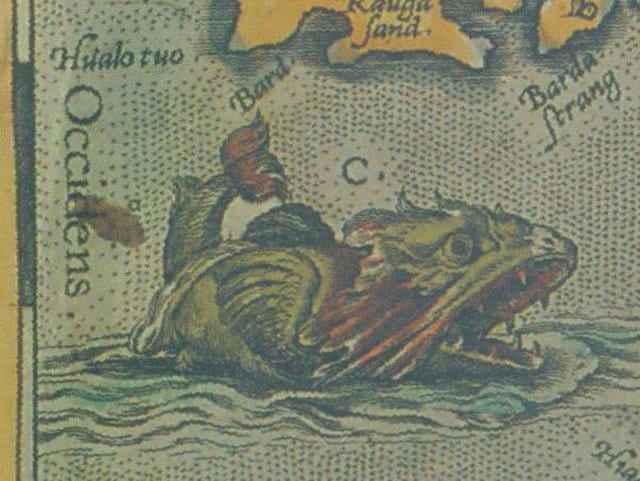
Dating back to the 16th century, “Islandia” is considered the most revered printed map available.  Ortelius is credited not only with this creation but is also responsible for Theatrum Orbis Terrarum (“Theatre of the World”), the earliest modern atlas.  In Islandia, the  sea swarms with seventeen menacing looking creatures. Each is labeled with a letter and on the back of the map are descriptions like:

“Ziphius, a horrible sea monster, swallowing the black seal at one bite.”

“Hroshualur, that is as much to say as the Sea-horse, with a mane hanging down from his neck like a horse. It often does the fishermen great hurt and scare”

Education as we know it today has some “monsters.”  Problems which arguably are of mythological proportions.

Borrowed from: https://commons.wikimedia.org/
A New Narrative is About Redesign, not Resolution

For early mariners, what lurked in the ocean depths induced trepidation.  Such unchartered waters are akin to education’s uncertain future.  Jeremy Lent, author of Web of Meaning theorizes how “the pervasiveness of technological change is tearing apart norms that have been entrenched for centuries.”  The cat (new ways of living and learning) is out of the bag!  Is education as we’ve known it in a state of total makeover, or takeover?  Regardless, days are numbered for the industrial model of education built upon compliance.  The new narrative requires not only critical thinking, and problem solving, but also the budding of a collective intelligence, if not connected consciousness.  Only then might we begin to navigate around, over, under, and through the many “monsters.”  The leviathans might be one or any combination of a broken social contract, the effects of artificial intelligence, gene editing, rising sea levels, climate disasters, and civilization collapse. Each demands resolution yet a future imbued with fear would be better shaped by redesign. One guided by wisdom but also choice.

A Future Free of Monsters 

The nature of transition is one of uncertainty. Education as a system is in a state of flux, if not decay. Knowing fully well that which we do not wish to recreate, such an opportunity to “redesign” rightly wells up in us, feelings of excitement. If anything, the past few years serve us well as a testament to the resilience of societies. Equally, we have looked on as trends move towards democratization and burgeoning decentralization. A glimpse of “the possible” continues to  become focalized.  Think Mastery Transcript Consortium. With this, more students are being empowered to determine paths of learning that are more exploratory and less dictatorial.  Further, a myriad of learning models continue to muster a new way forward.

Four hundred years ago monsters were included on maps. Approximately three hundred years ago “modern” education was birthed. A monstrosity in its own right, as the model supposedly copied from a Prussian model was “designed to create docile subjects and factory workers,” according to David Brooks, writer for the New York Times. Though it may be enticing to contemplate a future free of monsters, it behooves us to instead center our attention on leveraging the accelerated change we are amidst. And then to amplify such precepts as relationships, creativity, and meaning. A future where more unaddressed envelopes are received won’t just happen. It will take a deliberateness in community creation, shared vision, and a continued awakening to possibility.  The choice to live and learn purposefully and collectively, is ultimately just that.  A choice!


Four Baby steps to Erase the Ubiquitous Monsters
  1. Focus on the future and not the past: while some schools and businesses seem to relish tradition, this history may lead to more brittleness than it does wisdom.  Turning around to the look at yesterday may not answer what lies on the horizon. Continuing to “operate as normal” will not prepare new generations for the “unknown.” 
  2. Emphasize listening, not speaking, in a concerted effort to learn. 
  3. Empower youth to willfully hack their way into tomorrow, excitedly determining paths less traveled and finding what works for each unique individual. 
  4. Invite failure and envision every opportunity to learn and grow.

#################

POSSIBILITY. PURPOSE. ACTION.

I am not an old man.

10 print “Hello, I am cool.”
20 goto 10
Run

“Hello, I am cool” would cycle down the screen.  Early days of coding with BASIC in my later elementary years on an Apple 2E.

In high school my relationship with the phone was a bit adversarial and yet I dreamed of a day when I would see on a sort of screen, my aunt and uncle as I spoke with them on the phone.  Likely this was not entirely of my own imagination but influenced by the popular animated sitcom, “The Jetsons.”

During six years of university I borrowed a friend’s Brother word processor to type papers before toting around both floppy and hard diskettes, external writable storage devices. These were helpful when I managed to reserve computer time at the only computer lab on campus, a university with 16,000 enrolled students.

Imagine 16,000 students sharing 15 computers today!

For the first few years of teaching I did not have a personal or laptop computer.  There were no projectors in the classroom, aside from an overhead projector.  Next to it were printed transparencies to share and a stack of blanks for writing notes for the class to copy.

I am not an old man.

A few years into the 2nd millennium and classrooms began to be retrofitted for the digitization that was underway. Digital projectors began to be mounted on classroom ceilings and in one school I worked, SMART boards debuted. The interactive white boards all the rage before they quickly fizzled out.

The intention is not to look fondly back as if to say, “These were the days.”  All the contrary and instead, this short bit of history points at how far and fast we have come. Moreover, might we imagine what is next?  Anything is always possible, as I was reminded of this past week in class.

Oculus Provides a Glimpse Into the Future

“Ten years from now, everything is going to be virtual,” proclaimed one of my quieter eleven year-old students.  Her shyness overcome by both her passion and resoluteness.  We were preparing to have an introductory experience with virtual reality.  The device, the Oculus, aptly named for it means, “eye” in Latin.  Further, oculi are architecturally structural elements that are round openings at the tops of domes or cupolas. The Pantheon in Rome is one of the best examples. Originating in antiquity, the oculus is the perfect name as we begin to challenge ourselves in learning from the future.

The actual VR experience proved stimulating for students, the connection being one linked to our current unit on innovation and how access clearly is a social justice issue. More provocative than virtually dancing with a robot, was the captivating conversation that ensued. One which reflected how students need not wait to create their own reality and how entrepreneurial mindsets  can drive transformative experiences in our schools. A definitive juxtaposition from the default where educational models often result in teachers and students senselessly passing back and forth assignments.  Free of audience and purpose.

An Entrepreneurial Spirit Remains Alive

“So much is already virtual. I am selling my art as NFTs,” voiced probably my second most reserved student. He went on to broadcast the platform where five of his digital art pieces are being auctioned. Students enquired about the cost and the artist further imparted what he understood about non fungible tokens (and though English is his second language, he pronounced this perfectly), cryptocurrencies and Ethereum in particular.  In effect, between the five pieces of his artwork, the value was equivalent to more than $18,000USD.  I remind you, this is an eleven-year old.  So, it’s possible he could enter school, sit all day being talked at by teachers, and exit at 2:30 with thousands of dollars in his virtual pocket, or wallet.

Why not tap into this?

None of the art was done at school.  None of the computer platform learning or marketing if you will.  None of the background on cryptocurrencies and NFTs.

Yet, he and so many other students, find a way to learn.  To follow their passions.  In this case, business and art.  But what about the child studying the United Nations Sustainable Development Goal 6, ensuring a clean and stable water supply and effective water sanitation for all people?  Is she effectively contributing to making a difference so this goal might be realized in the next eight years?  Or, might she simply be researching, taking notes, and making a Google slides presentation?

Possibility.

Purpose.

Action.

Seems these three words might best become a mantra of sorts in our schools.

10 print “Possibility. Purpose. Action.”
20 goto 10
Run

################